Introduction
A branded check presenter is one of the last things a guest touches before leaving your restaurant, bar, or hotel — which makes it one of the cheapest, most overlooked branding opportunities in hospitality. Yet when buyers start looking for where to buy custom logo check presenters, they usually run into the same problem: too many supplier types, inconsistent minimum order quantities (MOQs), and unclear information about materials, logo methods, and lead times.
This guide breaks down the real sourcing options available in 2026 — from local print shops to overseas factories — and explains what actually determines quality, cost, and reliability when ordering custom check presenters for a single location, a multi-unit restaurant group, or a hotel chain rollout.
We'll also cover what happens behind the scenes during production and quality control, so you know what questions to ask before placing an order.
What Is a Check Presenter, and Why Does Branding It Matter?
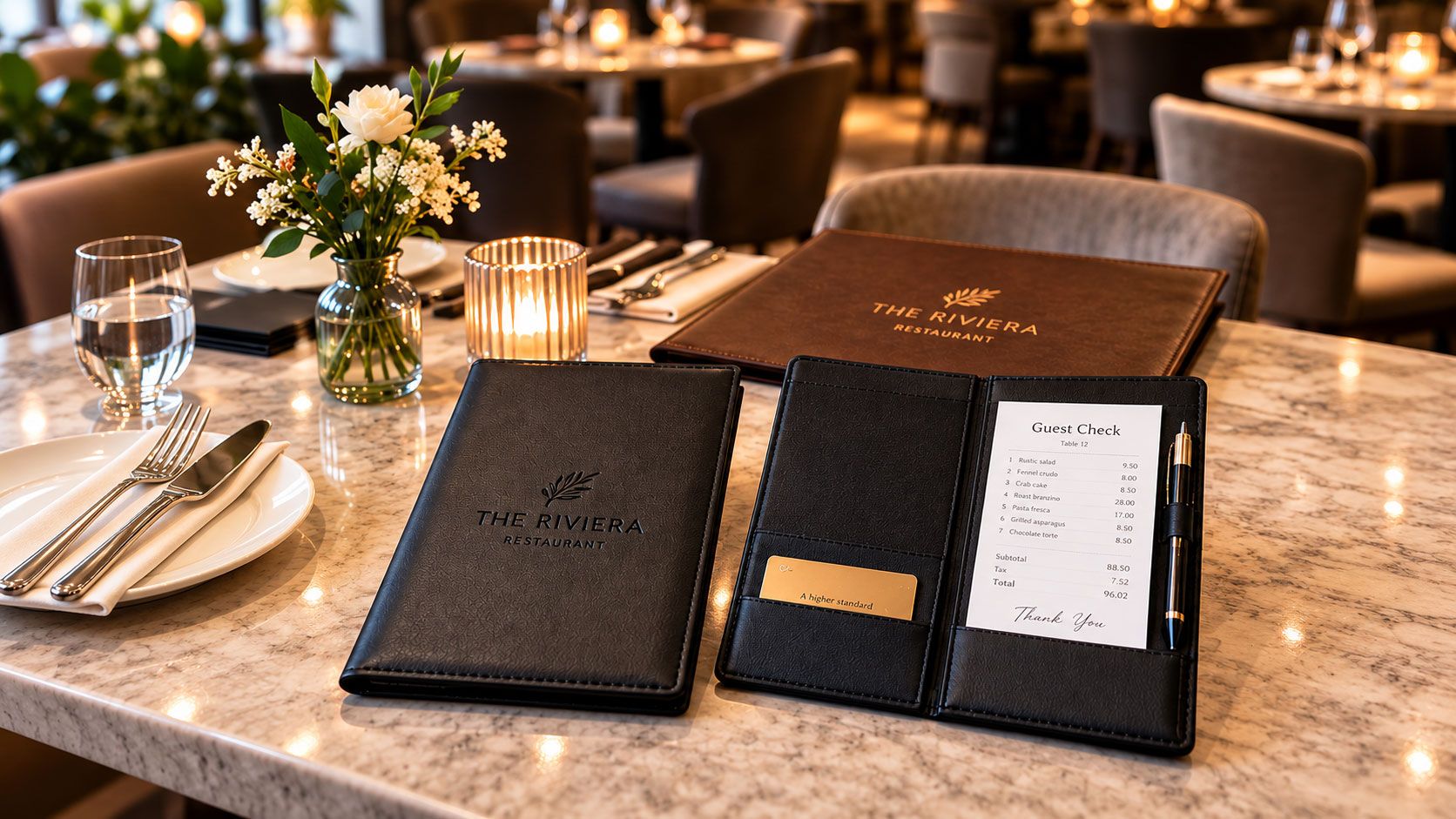
A check presenter (also called a bill presenter, guest check holder, or server book) is a small folder used by waitstaff to present the bill, process payment, and return change or a receipt to the guest. Most check presenters are built from a durable exterior material — PU leather, genuine leather, or vinyl — wrapped around an interior insert pocket, with an optional pen loop, card slot, or receipt pocket.
Branding a check presenter with a debossed, embossed, or foil-stamped logo does two things for a hospitality business:
For multi-location groups, a consistent custom check presenter across every venue also simplifies purchasing — one spec, one supplier, predictable reorders.
Where to Buy Custom Logo Check Presenters: 5 Common Sourcing Channels
Buyers typically source custom check presenters through one of five channels. Each has trade-offs in price, MOQ, customization depth, and lead time.
1. Local Print & Promotional Product Shops
Local print or promotional product vendors can usually add a logo to a stock check presenter via screen printing or a stick-on label. This works for single-location restaurants that need a small quantity quickly and don't require deep customization (custom color, custom size, or premium branding methods like foil stamping).
Trade-offs: Limited material options, higher per-unit cost at volume, and logo application methods are often restricted to what the local shop's equipment can handle.
2. Hospitality Supply Retailers (Online & Catalog)
Restaurant supply retailers carry pre-made check presenters in a handful of standard colors and sizes, with basic logo customization (usually foil stamping or debossing) added as an order option. This channel works well for buyers who want a known catalog price and don't need to negotiate specs from scratch.
Trade-offs: Product range is fixed to what’s already in the catalog. Custom sizes, custom interior layouts, or non-standard materials (e.g., a specific Pantone-matched leather) are often not available, and reorders may be subject to the retailer’s own stock cycles.
3. B2B Marketplaces (Alibaba, Global Sources, etc.)
B2B marketplaces connect buyers directly with manufacturers, mostly based in China, and typically offer the widest range of materials, sizes, and logo methods, along with the lowest per-unit pricing at volume. This is where most hospitality groups, distributors, and private-label brands source check presenters once they move beyond small, one-off orders.
Trade-offs: Supplier quality varies widely. Buyers need to vet manufacturing capability, communication responsiveness, and quality control processes directly — the marketplace itself doesn't guarantee any of this.
4. Trade Shows & Sourcing Agents
Hospitality trade shows (such as the NRA Show or regional hospitality expos) and sourcing agents can connect buyers with vetted manufacturers and allow in-person sample review. This is a reliable path for larger buyers who want to build a long-term supplier relationship but don't have the time or in-house sourcing expertise to vet overseas factories independently.
Trade-offs: Sourcing agents typically charge a commission or markup, and trade show cycles mean this isn't always a fast option for urgent orders.
5. Direct Factory / OEM-ODM Manufacturers
Ordering directly from a factory that manufactures check presenters in-house (rather than a trading company that resells factory output) gives buyers the most control over material selection, construction, logo application, and pricing — because there's no intermediary markup. This channel is best suited to buyers who can specify their requirements clearly (size, material, logo method, quantity) and who value having one point of contact from sampling through production and shipment.
Trade-offs: Requires more upfront communication to align on specs, and lead times include production time (typically several weeks) rather than shipping from existing stock.
What to Check Before You Order
Regardless of which channel you choose, the following specifications determine both the quality and the total cost of your custom check presenters.
Material Options
Material choice affects not just cost, but how the logo will look — debossing and foil stamping typically render more cleanly on leather and PU leather than on thinner vinyl.
Logo Application Methods
The right method depends on your logo's complexity and the material you've chosen — a factory with in-house tooling for multiple methods can usually recommend the best combination during the sampling stage rather than after an order is placed.
MOQ and Sample Policy
MOQs for custom logo check presenters typically range from 50 to 200 units per design when ordering direct from a manufacturer, though this varies by material and logo method (foil stamping tooling, for example, may require a slightly higher minimum than debossing). Reputable suppliers should offer a paid sample — usually shipped within a few days — before you commit to a production run, so you can confirm material feel, logo placement, and stitching quality firsthand.
Real Sourcing Experience: What Happens Between Order and Delivery
Buyers rarely see what happens between placing an order and receiving a shipment, but this is where quality is actually determined. Based on how custom check presenter production typically runs at a hospitality-focused factory:
For a restaurant group placing a multi-location order, it's worth asking a supplier directly how they handle stitching QC and pre-shipment inspection — a supplier that can describe this process in specific terms is generally a stronger signal of reliability than one that only offers a general quality guarantee.
How to Evaluate a Supplier: A Quick Checklist
Before placing a custom logo check presenter order, confirm the following with any supplier:
A supplier who answers these questions specifically — rather than with general marketing language — is more likely to deliver consistent results across repeat orders.
Frequently Asked Questions
FAQ
How much does a custom logo check presenter cost?
Pricing depends on material, size, logo method, and order quantity. PU leather check presenters with a single-color debossed or foil-stamped logo are typically the most cost-effective option at volume, while genuine leather with multiple branding elements sits at the higher end.
What is a typical MOQ for custom check presenters?
Most direct manufacturers set MOQs between 50 and 200 units per design, though this can vary based on the logo application method and material selected.
How long does production take?
After sample approval, production typically takes a few weeks, depending on order size and the complexity of the logo application. Buyers should account for both production time and shipping time when planning a launch or rollout date.
Can I order a sample before committing to a full order?
Reputable suppliers should offer a paid sample prior to mass production, allowing you to check material, logo placement, and construction quality firsthand.
What's the difference between debossing and foil stamping?
Debossing presses the logo into the material without color, creating a subtle, tactile effect. Foil stamping applies a metallic or colored foil under heat and pressure, producing a higher-contrast, more visually prominent result — often preferred for logos on dark leather or PU leather.
Is it better to buy from a local supplier or a factory overseas?
Local suppliers are useful for small, urgent orders with basic branding needs. Factory-direct sourcing typically offers more material and customization options, better per-unit pricing at volume, and is generally the better fit for multi-location groups or brands planning recurring reorders.
Conclusion
Buying custom logo check presenters comes down to matching your order size, timeline, and branding requirements to the right sourcing channel. Local shops and retailers work well for small, fast, low-customization orders. Factory-direct manufacturing offers the broadest material and branding options along with the best per-unit economics — but it requires clear communication on specs and a supplier that can walk you through their sampling and quality control process in specific terms.
Whichever channel you choose, insist on a physical sample before committing to a production run, and ask suppliers to explain their quality control process rather than accepting a general guarantee.
Next Step
Get a Custom Quote
Looking to source custom logo check presenters for your restaurant, hotel, or hospitality group? MENUNIQUE manufactures check presenters in-house — including leather and PU leather options, waitstaff server books, and custom branding via debossing, embossing, foil stamping, and screen printing — with flexible MOQs and sample availability before production. Download our catalogue at themenunique.com to see material and branding options in detail.
Request a Quote